
State Of Digital Government Review_

Does the government's review reflect the real digital challenges your organisation faces?
A System in Need of Reform_
The UK public sector invests heavily in digital technology—over £26 billion annually—and employs around 100,000 digital and data professionals. Millions rely daily on digital public services from local councils to hospitals and schools. When digital systems work well, as with the NHS app or GOV.UK, they deliver exceptional value. However, such success stories often emerge despite systemic barriers rather than because of them.
A new review, commissioned by the Secretary of State for Science, Innovation and Technology, paints a mixed picture. While the UK has digital talent and innovation, widespread challenges hold back transformation. Satisfaction with public services has declined, and nearly half of government and NHS services still lack digital pathways.
Key issues include underinvestment in core infrastructure, heavy reliance on outdated legacy systems, fragmented data, and insufficient digital leadership. Cyber risk is high, service outages are common, and critical systems remain vulnerable. At the same time, public sector digital spending is 30% below international benchmarks and skewed toward short-term programmes over long-term resilience.
The report identifies five root causes:
Leadership – Digital is not prioritised or incentivised.
Structure – Fragmented systems limit scale and standardisation.
Measurement – No consistent tracking of service quality, cost, or risk.
Talent – Recruitment and retention of skilled staff lag behind the private sector.
Funding – Legacy systems are underfunded while new initiatives dominate budgets.
Despite these challenges, pockets of innovation persist—such as AI use in police response systems and smart data-sharing in education. However, without systemic reform, digital excellence will remain the exception, not the norm. The report calls for a shift towards a unified, outcomes-focused digital government—backed by strategic leadership, sustainable funding, and empowered digital teams.

Digital Reform: What would it take for digital to be seen as a core driver of service delivery in your organisation?
The Mindset Shift_
To respond effectively to the systemic challenges outlined in the digital government review, public sector organisations must go beyond technology upgrades. The real transformation begins with a fundamental shift in mindset—from seeing digital as a support function to embedding it as a core enabler of service delivery, policy implementation, and organisational resilience.
Here’s how organisations can begin to drive this shift:
Make Digital Leadership a Strategic Priority_
Digital leaders should sit at the executive table, influencing organisational direction rather than simply reacting to it. This means:
Elevating Chief Digital Officers and CIOs within governance structures.
Recognising digital capability as critical to service and policy success.
Ensuring senior leaders have digital literacy and the training to oversee tech-enabled change.

Better Outcomes Through Shared Ownership_
Foster Collaboration Across Functions_
Digital delivery cannot operate in a vacuum. Successful reform requires close collaboration between digital, operational, and policy teams. Organisations should:
Embed multidisciplinary teams in programme design from the outset.
Encourage shared ownership of outcomes, not just outputs.
Break down silos that prevent consistent user experience across services.
Prioritise Outcomes Over Outputs_
Shift focus from delivering “projects” to achieving long-term service improvement. That means:
Defining success through user impact, service resilience, and cost-effectiveness.
Applying iterative delivery methods that adapt to learning and change.
Tracking progress with clear, consistent digital performance metrics.

Invest in People, Not Just Products_
Sustainable transformation depends on building internal digital capability. Public sector organisations should:
Rebalance reliance on contractors with long-term investment in civil service digital talent.
Create clearer career pathways and more competitive pay frameworks.
Focus on growing technical skill, particularly in data, cloud, and AI, across the workforce.
Reform Funding Models_
Funding must reflect modern digital practice, flexible, sustained, and focused on continuous improvement. Steps include:
Shifting investment from capital-heavy, one-off initiatives to operational and iterative models.
Embedding digital costs into the lifecycle of service funding.
Ensuring budget structures support legacy modernisation and not just new projects.

From Fragmented Systems to Connected Services_
Create and Share Common Platforms_
Public sector organisations must move away from bespoke solutions to shared platforms, open standards, and common data models. This unlocks:
Greater interoperability and consistency across services.
Better reuse of solutions and economies of scale.
Easier integration of emerging technologies like AI and automation.
By embedding these principles, public sector organisations can move from fragmented, reactive digital delivery to a coordinated, forward-looking approach—capable of meeting the expectations of users, responding to evolving risks, and delivering public value at scale.
Is your organisation equipped with the right expertise and capacity to lead this digital reform.

How Valuecom Can Help Drive Public Sector Digital Reform_
At Valuecom, we understand the scale and complexity of the UK public sector's digital challenges. Having supported organisations across healthcare, government, utilities and critical infrastructure, we recognise that successful digital transformation requires more than technology alone. It requires strong leadership, effective governance, modern delivery practices and a clear focus on outcomes.
We help organisations turn strategy into measurable results through practical, delivery-led expertise.
Strategic Digital Delivery_
We work alongside leadership teams to align digital initiatives with policy, operational and organisational objectives, ensuring services are resilient, user-centred and outcome-focused.
Legacy System Modernisation_
We help organisations assess, prioritise and address technical debt, reducing risk, improving service reliability and creating a clear path towards modern platforms and technologies.
Agile Transformation_
Our consultants embed modern delivery practices, including Agile, DevOps and ITIL, helping organisations build internal capability while improving responsiveness, collaboration and service delivery.
Cross-Functional Collaboration_
We help break down organisational silos by bringing together policy, operational and technical teams, creating the alignment required to deliver sustainable change.
Data-Driven Improvement_
We support organisations in making better use of data, enabling improved decision-making, greater interoperability and stronger foundations for emerging technologies such as AI and automation.
Flexible, Scalable Support_
Whether providing strategic guidance, programme leadership or specialist expertise, we offer flexible engagement models designed to complement internal teams and deliver value at every stage of transformation.
Whether you're modernising legacy systems, improving digital service delivery or planning large-scale transformation, Valuecom provides the strategic insight, technical expertise and delivery discipline needed to turn ambition into lasting outcomes.
To respond effectively to the systemic challenges outlined in the digital government review, public sector organisations must go beyond technology upgrades. The real transformation begins with a fundamental shift in mindset—from seeing digital as a support function to embedding it as a core enabler of service delivery, policy implementation, and organisational resilience.
To respond effectively to the systemic challenges outlined in the digital government review, public sector organisations must go beyond technology upgrades. The real transformation begins with a fundamental shift in mindset—from seeing digital as a support function to embedding it as a core enabler of service delivery, policy implementation, and organisational resilience.
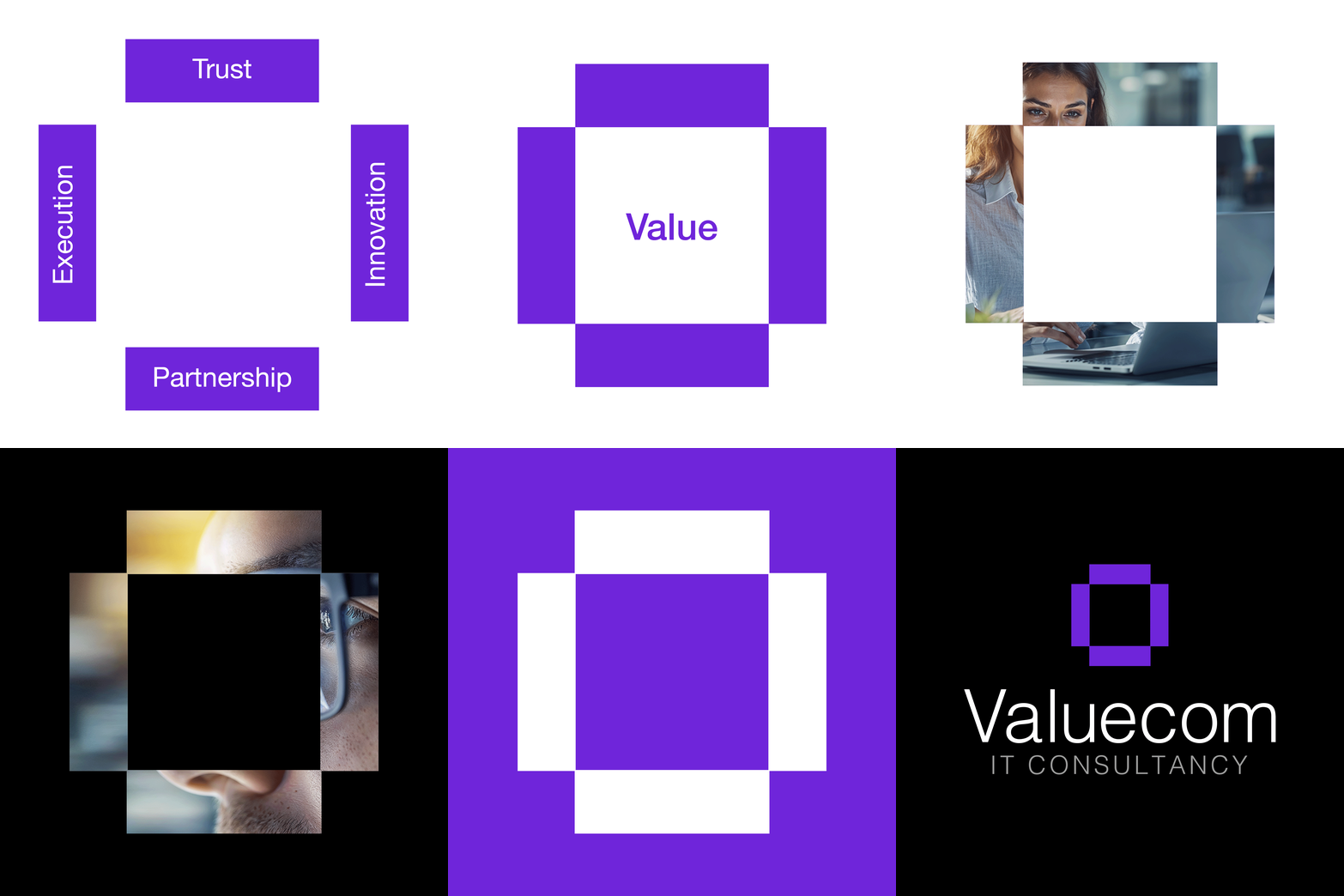
Our brand is founded on four core values: Trust, Innovation, Execution, and Partnership. Our symbol embodies each of these principles and illustrates how they come together to create measurable value for our customers.
Valuecom: The right team and strategy to deliver success